I
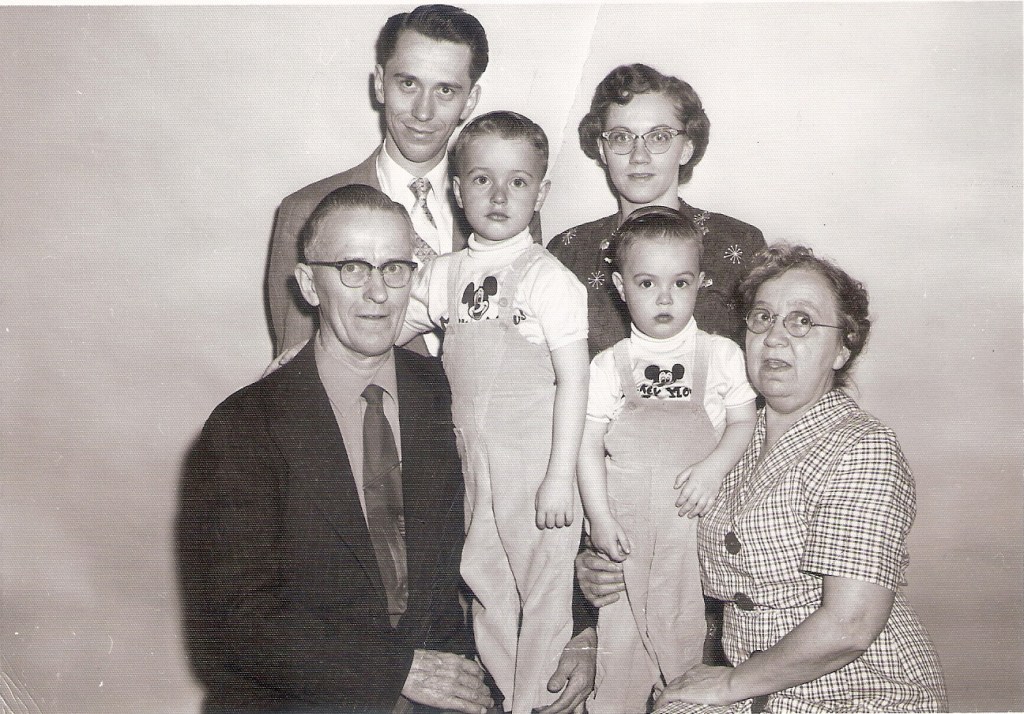
If you are family and over the age of 10, you remember Roy Carnahan.
I wish I could say I have felt the loss of him these five years more strongly. I see others post Facebook pictures of themselves with their dads on anniversaries, and others who can’t seem to detach when their fathers are gone. I am neutral, and I hope my survivors one day see me differently.
You know Roy was a church administrator, and had been since 1969. His work as a minister of the gospel, always answering what he felt was a “call” decades ago, defined him and did not take a secondary role to anything else, including wife and children. I came to see him as self-centered, but not in the toxic way that leads to overt abuse.
He was also, unsurprisingly, self-confessedly “conservative”, in political and social matters, but that was only a tool to be deployed in the service of the Kingdom of God. I picked up from him that intervention by government was a “liberal” notion, and I challenged him when the crackdown on tobacco came in the 1960s. Opposition to the consumption of tobacco and alcohol, even the appearance of it, even the parking of a car next to a beer bottle on the sidewalk, was to him a bedrock moral issue, so how? How could we support liberal government strictures on cigarettes and remain “conservative”? His considered answer, unconvincingly, was that we were conservative on some matters and liberal on others — it all depended on what God wanted.
We grew apart in later years. He and I had little but bland neutralisms to say to each other. He began his short slide into dementia around Christmas of 2016, and that is a mercy, because those days would have been very fraught otherwise, when my last fidelity to the evangelicalism of my youth finally withered away.
But never mind all that! I prefer not to obsess on the little slights and injuries that everybody suffers at the hands of everyone else. For me, his ultimate being was revealed when I was 25, in 1977.
My bride and I, childless then, returned from my graduate studies in Rochester in the fall, and we crashed with my parents at their house in Ellicott City while we sorted out our next move. That took us 6 weeks, and then we were ready to occupy an apartment in the Brick Jungle in Hyattsville. Dad agreed to help us move our stuff stacked up in his garage, using his Caprice and the U-Haul trailer I rented. We made one trip down there early on a Saturday morning, unloaded and returned. We made a second round-trip and broke for lunch. We finished the third round-trip by 4 p.m., and Roy, then age 50, was clearly flagging. (I remember how I felt at 51, preparing the Montgomery Street house for April’s wedding.)
Dad went straight to his recliner to await dinner. Soon thereafter I, literally and figuratively full of beans, was ready to load up for the fourth time. Dad was not ready, and I knew very well he wanted me to suggest calling it a day and finishing up some other time, but I wasn’t having that. When it was clear he was doomed, he dragged himself to his feet and we got it done by 9 that night.
Now, I, way past 50, get regular but reasonable requests for aid from family, and I do my best to emulate Roy Carnahan. In that way, he is still with me.
II
At the end of his life, he spent a lot of time in a deck chair outside, with one of his Trumpy books. He would sit there for hours, alternately reading, snoozing, and praying.
One day he said to me he’d determined what the four verities of life were. To work, to save, to invest, and to give. I agreed. I said we’d all be better off if we paid more attention to those things.
Three of them, however, were flatly unbiblical [Matthew 6], but still I would go along. Now Dad was not a good student or a good debater at any point, so here he employed one of his favorite stratagems: he’d just repeat his argument and not address mine. “Well, I just think the four verities are … ”

 Days of Wine and Roses, and Vasectomies
Leave a comment